

All AI classes include
 Free retake
 Detailed curriculum
 Live instructor
 Flexible rescheduling
 Certificate of Completion
 Small class sizes
 Course recording
- Building reusable, production-oriented data pipelines in Python
- Training, evaluating, and tuning classification and regression models with scikit-learn
- Applying ensemble methods and dimensionality reduction techniques to real datasets
- Interpreting model behavior using feature importance and SHapley Additive exPlanations (SHAP)
- Building and training neural networks using TensorFlow/Keras or PyTorch
- Implementing CNNs for image tasks and sequence models for time-series or text data
- Calling LLM APIs programmatically and engineering prompts for consistent, structured output
- Designing and building a working RAG pipeline: chunking, embeddings, vector database retrieval, and generation
- Evaluating GenAI application output for quality, cost, and reliability in a production context
This class is also available at a reduced rate as part of a certificate program
There are currently no evening classes scheduled for this course.
Please call 800-851-9237 or 781-376-6044 to schedule a course
Artificial Intelligence and Data Science Course Topics
Data Science and Python for ML Workflows
Focus: Core data manipulation and analysis using industry-standard Python libraries, at working-developer pace
NumPy for Numerical Computing
- Arrays, vectorization, and broadcasting: writing efficient, non-loop-based code
Pandas for Data Manipulation
- DataFrames/Series, advanced indexing and filtering
- Cleaning, merging, joining, grouping, pivoting, and reshaping datasets
- Performance considerations for larger datasets
Exploratory Data Analysis (EDA)
- Statistical summarization and distribution analysis
- Visualization with Matplotlib/Seaborn for diagnostic, not just presentation, purposes
Data Pipelines
- Ingesting data from Comma-Separated Values (CSV) files, Structured Query Language (SQL) databases, and Application Programming Interfaces (APIs); structuring reusable, reproducible data pipelines
- Preparing datasets for downstream ML use (train/test splits, encoding, scaling)
Hands-on Lab: Refactor a messy, real-world dataset into a clean, reusable data pipeline ready for modeling
Foundational ML Techniques
Focus: Foundational ML modeling techniques and the standard ML workflow
ML Problem Framing
- Supervised vs. unsupervised; regression vs. classification; choosing the right approach
Regression and Classification
- Linear/polynomial regression, logistic regression, k-Nearest Neighbors (k-NN), decision trees
- Evaluation metrics: Root Mean Squared Error (RMSE), Mean Absolute Error (MAE), and R-squared (R²) for regression; accuracy, precision, recall, F1 score, and Receiver Operating Characteristic/Area Under the Curve (ROC/AUC) for classification
Feature Engineering
- Encoding, scaling, handling categorical and high-cardinality data
- Feature selection and leakage pitfalls
Model Validation
- Cross-validation, bias-variance tradeoff, avoiding overfitting
- scikit-learn pipelines for reproducible workflows
Hands-on Lab: Build, evaluate, and iterate on a classification pipeline in scikit-learn
Advanced ML Techniques
Focus: Advanced ML modeling techniques, tuning, and interpretability
Ensemble Methods
- Random forests and gradient boosting frameworks such as Extreme Gradient Boosting (XGBoost) and Light Gradient Boosting Machine (LightGBM); bagging vs. boosting
Unsupervised Learning
- Clustering (k-means, hierarchical); dimensionality reduction using Principal Component Analysis (PCA)
Hyperparameter Optimization
- Grid search, random search, and validation strategy at scale
Model Interpretability
- Feature importance and SHapley Additive exPlanations (SHAP) for explainability
From ML to Neural Networks
- Where classical ML breaks down (unstructured data, high-dimensional inputs)
- Conceptual bridge into neural network architectures
Hands-on Lab: Build and tune an ensemble model; compare against Day 2 baselines and interpret results
Deep Learning, Neural Networks and Architectures
Focus: Neural networks and deep learning architectures
Neural Network Mechanics
- Layers, weights, activation functions, forward/backpropagation, loss functions, optimizers
- Building and training networks in TensorFlow/Keras or PyTorch
Convolutional Neural Networks (CNNs)
- Convolution/pooling operations; image classification workflows
Sequence Architectures
- Recurrent Neural Networks (RNNs) and Long Short-Term Memory (LSTM) networks for sequential and time-series data
- Where sequence models hit their limits, motivating the shift toward attention mechanisms
The Transformer Architecture
- Self-attention, positional encoding, and why Transformers displaced RNNs for language tasks
- Conceptual on-ramp into how LLMs are built on this architecture
Training in Practice
- Regularization, batch normalization, Graphics Processing Unit (GPU) acceleration, and training-time tradeoffs
Hands-on Lab: Train and evaluate a neural network on an image or text classification task
GenAI, Large Language Models (LLMs), Prompt Engineering, and Retrieval-Augmented Generation (RAG)
Focus: Practical application of LLMs, prompt engineering, and RAG
How LLMs Work in Practice
- Tokens, embeddings, and context windows: the mental model needed to build with LLMs
- Landscape of model providers and API access patterns
Prompt Engineering
- Prompt structure, system/user roles, few-shot examples
- Chain-of-thought, structured output, and iterative prompt evaluation
Building with LLM APIs
- Programmatic API calls, parameter tuning (temperature, max tokens), handling structured responses
Retrieval-Augmented Generation (RAG)
- Embeddings and vector databases (Chroma/FAISS/Pinecone)
- Designing a RAG pipeline: chunking strategy, retrieval, re-ranking, generation
- Evaluating RAG output quality and reducing hallucination
Production Considerations
- Cost/latency tradeoffs, data privacy, and where RAG fits into existing engineering systems
Hands-on Lab: Build a working RAG application over a custom document set, from ingestion through query response
Participants trace the full arc, from a raw Python data pipeline, through ML and Deep Learning models, to a deployed GenAI application.
AI course instructors
AGI instructors are AI professionals and skilled teachers. You'll learn from a live AI professional that brings years of experience that will help you learn AI quickly and easily.
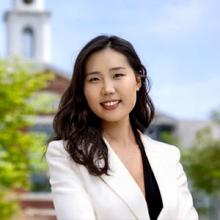
Grace
MS, Information Design
BA, Digital Communications
Adjunct Professor, St. Olaf
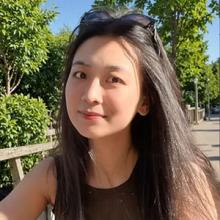
Shirley
MLA, Harvard
MS, Bentley
BS, Bentley
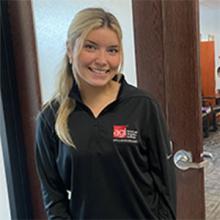
Elizabeth
BS, Finance
Teaching Assistant, Virginia Tech
Accounting & Finance Roles

Fred
MIT, Data Science
SCRUM Master
Certified Technical Trainer
Custom and private AI classes
This AI course is available as a private class. Curriculum can be customized for your specific needs. AI classes can be delivered at your location, online, or in our classrooms. For more information, call 781-376-6044 to speak with a training consultant or contact us.
No prior ML, Deep Learning, or GenAI experience is required. You will learn to work with a number of platforms in this course. For corporate trainign this can be adapted to your in-house stack. We commonly include Python, Jupyter, NumPy, Pandas, Matplotlib/Seaborn, scikit-learn, XGBoost, TensorFlow/Keras or PyTorch, an LLM API (e.g., OpenAI/Anthropic), and a vector database (e.g., Chroma/FAISS/Pinecone)
You will receive a comprehensive course manual for this class developed by the instructors at AGI. AGI instructors have created many of the official training guides and books for Adobe Systems and Microsoft.
Prerequisites for this AI course
Prior to attending this AI classes, you should be familiar with all the concepts covered in the: AI Course for Business . This can be through attending the course or through experience.